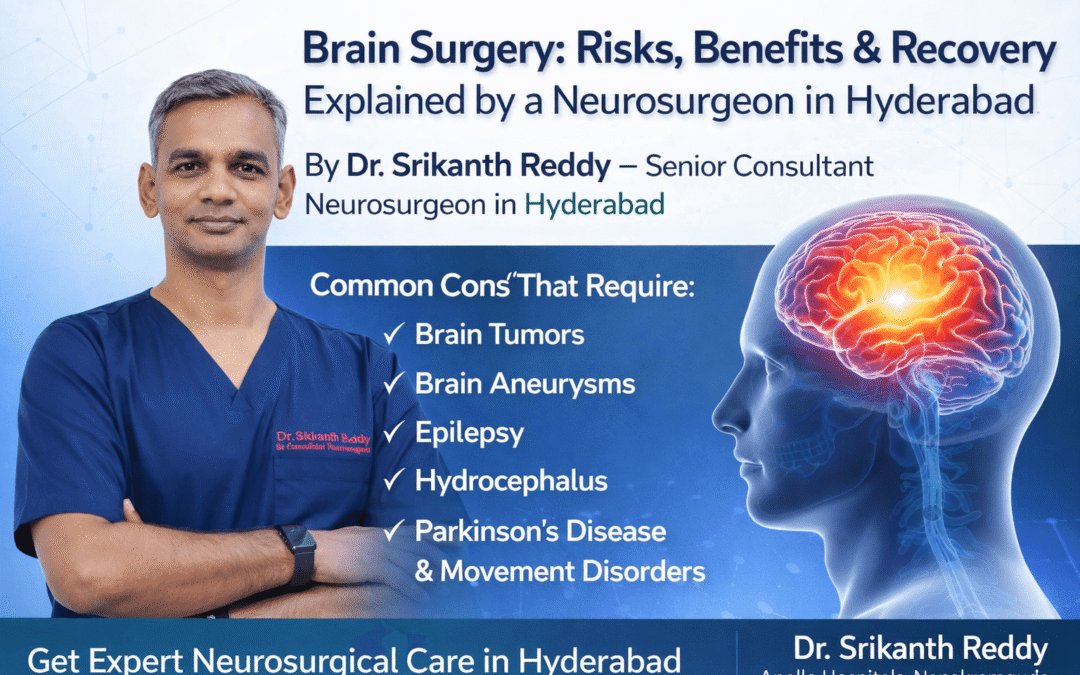
By Dr. Srikanth Reddy – Senior Consultant Neurosurgeon, Apollo Hospitals, Nanakramguda, Hyderabad
Brain surgery is often considered one of the most complex procedures in medicine. However, modern advancements have made brain surgery safer, more precise, and highly outcome-driven.
If you are searching for:
- Is brain surgery dangerous?
- What are the risks of brain tumor surgery?
- How long does recovery take after brain surgery?
- Who is the best neurosurgeon in Hyderabad?
This comprehensive guide explains everything in a clear, evidence-based manner.
What Is Brain Surgery?
Brain surgery (intracranial neurosurgery) involves operative procedures performed to treat:
- Brain tumors
- Brain aneurysms
- Epilepsy
- Hydrocephalus
- Parkinson’s disease & movement disorders
- Brain trauma
- Vascular malformations
It is performed by a qualified neurosurgeon, using advanced imaging, precision mapping, and minimally invasive techniques.
Common Conditions That Require Brain Surgery
1. Brain Tumor Surgery
Brain tumors account for nearly 300,000 new cases globally each year.
- Gliomas
- Meningiomas
- Metastatic brain tumors
- Pituitary adenomas
Studies show that greater tumor removal improves survival in glioma patients. For benign tumors such as meningiomas, complete removal can be curative in 80–90% of cases depending on location.
When Is Brain Tumor Surgery Needed?
- Progressive neurological symptoms
- Increased intracranial pressure
- Tumor growth on MRI
- Seizures caused by tumor
Early surgical intervention improves long-term outcomes significantly.
2. Brain Aneurysm Surgery
Around 3–5% of people may have an unruptured brain aneurysm.
If rupture occurs:
- Mortality can reach 40%
- Many survivors experience long-term disability
Surgical clipping or endovascular treatment reduces the risk of life-threatening hemorrhage.
Early diagnosis and timely intervention save lives.
3. Epilepsy Surgery
About 30% of epilepsy patients do not respond to medication.
Research shows:
- 60–70% seizure freedom in selected surgical cases
- Better quality of life compared to continued drug therapy
Epilepsy surgery is not experimental — it is evidence-based and life-changing for eligible patients.
4. Hydrocephalus Treatment
Hydrocephalus causes excess cerebrospinal fluid buildup in the brain.
Treatment options include:
-
Ventriculoperitoneal (VP) shunt
-
Endoscopic Third Ventriculostomy (ETV)
Early surgical correction prevents progressive brain damage and improves neurological development in children and adults.
5. Deep Brain Stimulation (DBS) for Parkinson’s Disease
Deep Brain Stimulation has strong clinical evidence.
Benefits include:
-
40–60% improvement in motor symptoms
-
Reduced medication dependency
-
Improved quality of life
DBS is a highly specialized functional neurosurgery procedure.
Types of Brain Surgery: Modern Techniques
Neurosurgery today uses:
-
High-resolution MRI
-
Neuronavigation systems
-
Intraoperative neuro-monitoring
-
Functional brain mapping
-
Awake craniotomy
-
Minimally invasive endoscopic surgery
Craniotomy
A controlled surgical opening of the skull to access brain tissue.
In experienced hands:
-
Mortality rates in elective tumor surgery: below 2–4%
-
Major complication rates: generally under 10%
Modern precision techniques have significantly improved safety.
Minimally Invasive & Endoscopic Brain Surgery
Endoscopic approaches allow access through smaller openings.
Benefits include:
-
Reduced blood loss
-
Shorter hospital stay
-
Faster recovery
-
Lower infection risk
For example, many pituitary tumor surgeries allow discharge within 48–72 hours.
What Are the Risks of Brain Surgery?
Every surgery carries risk.
Possible complications include:
-
Bleeding (1–5%)
-
Infection (less than 3% in advanced centers)
-
Stroke
-
Temporary neurological weakness
-
Seizures
-
Brain swelling
However, in high-volume centers with experienced neurosurgeons, risks are predictable and carefully managed.
The key question is not whether risk exists — but whether the benefits outweigh the risks.
Recovery After Brain Surgery
Recovery depends on:
-
Type of surgery
-
Brain area involved
-
Patient age
-
Overall health
Typical Hospital Stay
-
Brain tumor surgery: 3–7 days
-
Minimally invasive procedures: 2–4 days
-
Complex vascular cases: longer ICU observation
Functional Recovery Timeline
-
Fatigue: 4–6 weeks
-
Cognitive improvement: 2–3 months
-
Gradual neurological recovery supported by brain plasticity
Early physiotherapy and rehabilitation accelerate recovery.
Does Brain Surgery Improve Quality of Life?
Long-term studies show:
✔ Relief from seizures
✔ Reduced brain pressure
✔ Stroke prevention
✔ Improved mobility
✔ Reduced chronic pain
✔ Increased independence
In many cases, delaying surgery may increase neurological damage.
Timely intervention improves survival and functional outcomes.
When Should You See a Neurosurgeon in Hyderabad?
Seek immediate medical evaluation if you experience:
-
Persistent severe headaches
-
Sudden weakness or numbness
-
Recurrent seizures
-
Vision problems
-
Balance issues
-
Sudden “worst headache of life”
-
Memory or personality changes
Early diagnosis leads to better outcomes.
Brain Surgery in Hyderabad – Expert Care at Apollo Hospitals
Modern brain surgery is:
-
Image-guided
-
Precision-mapped
-
Minimally invasive
-
Continuously monitored
-
Evidence-based
Today, neurosurgery focuses not only on survival — but on preserving cognition, independence, and quality of life.
Consult Dr. Srikanth Reddy – Senior Consultant Neurosurgeon in Hyderabad
If you or your loved one has been advised brain surgery, timely consultation is crucial.
Dr. Srikanth Reddy specializes in:
-
Brain tumor surgery
-
Spine surgery
-
Aneurysm treatment
-
Epilepsy surgery
-
Functional neurosurgery
📍 Apollo Hospitals, Nanakramguda, Hyderabad
📞 Book an appointment for expert neurosurgical evaluation.