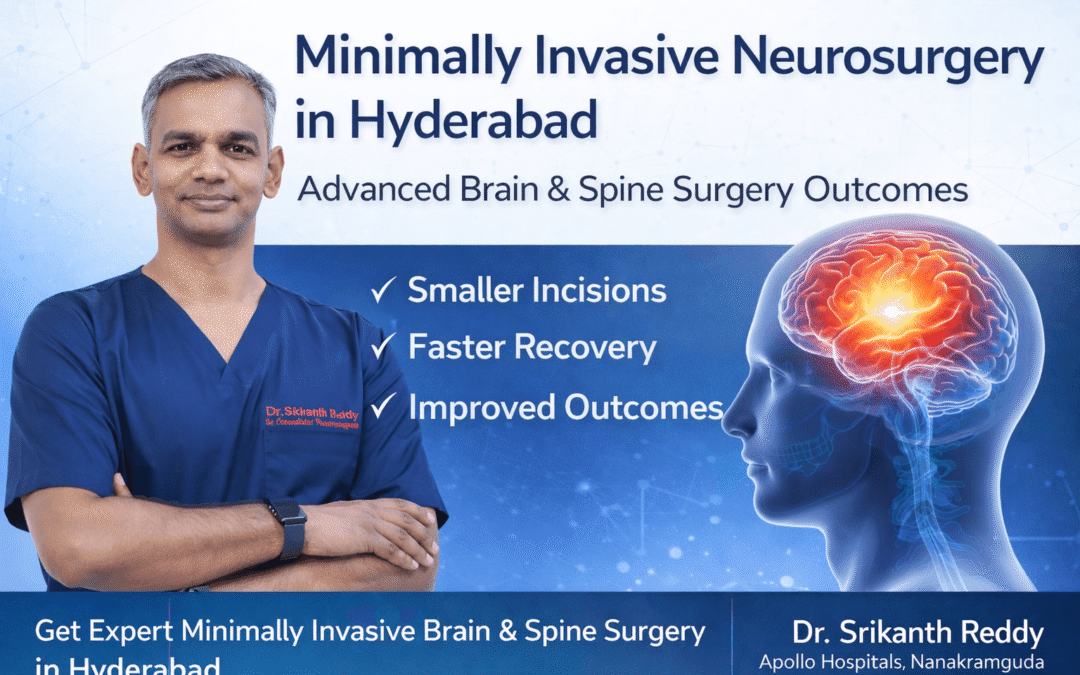
By Dr. Srikanth Reddy – Senior Consultant Neurosurgeon, Apollo Hospitals, Nanakramguda, Hyderabad
Modern neurosurgery has evolved dramatically over the past two decades. Today, many complex brain and spine conditions can be treated using minimally invasive neurosurgery techniques, resulting in faster recovery, reduced pain, and improved long-term outcomes..
If you are searching for:
-
-
What is minimally invasive brain surgery?
-
Is minimally invasive spine surgery safe?
-
Recovery time after minimally invasive neurosurgery
-
Best minimally invasive neurosurgeon in Hyderabad
-
This guide explains everything in clear, evidence-based terms.
What Is Minimally Invasive Neurosurgery?
Minimally invasive neurosurgery refers to advanced surgical techniques that:
- Brain tumors
- Brain aneurysms
- Epilepsy
- Hydrocephalus
- Parkinson’s disease & movement disorders
- Brain trauma
- Vascular malformations
The goal is simple: achieve maximum surgical effectiveness with minimal physiological disruption.
This approach does not compromise safety — it enhances precision and functional preservation.
Why Minimally Invasive Neurosurgery Is Transforming Outcomes
Compared to traditional open surgery, minimally invasive techniques often provide:
-
Reduced blood loss
-
Less postoperative pain
-
Lower infection rates
-
Shorter hospital stay
-
Faster return to normal activities
-
Better cosmetic results
-
Preservation of neurological function
However, proper patient selection and surgical expertise are critical
Minimally Invasive Brain Surgery Techniques
1. Endoscopic Brain Surgery
Endoscopic neurosurgery allows surgeons to operate through small openings using high-definition cameras.
Common conditions treated include:
-
Pituitary tumors (via endoscopic transnasal approach)
-
Colloid cysts
-
Intraventricular tumors
-
Hydrocephalus (Endoscopic Third Ventriculostomy – ETV)
Benefits of Endoscopic Brain Surgery
-
Smaller incisions
-
Reduced tissue manipulation
-
Shorter hospital stay
-
Faster recovery
-
Less postoperative discomfort
In many pituitary tumor cases, patients may be discharged within 48–72 hours.
2. Minimally Invasive Spine Surgery (MISS)
Minimally invasive spine surgery has become the gold standard for many spinal conditions.
Indications Include:
-
Lumbar disc herniation
-
Spinal canal stenosis
-
Degenerative spondylolisthesis
-
Vertebral fractures
-
Select spinal tumors
Using tubular retractors and microscopic visualization, surgeons can decompress nerves and stabilize the spine while preserving muscle integrity.
Proven Clinical Advantages:
-
Reduced intraoperative blood loss
-
Lower postoperative pain scores
-
Earlier mobilization
-
Faster return to work
-
Less muscle damage
Long-term outcomes are comparable — and in selected cases superior — to traditional open spine surgery.
Image-Guided & Navigation-Assisted Neurosurgery
Modern neuronavigation systems act as surgical GPS platforms.
By integrating MRI and CT scans, they allow:
-
Millimeter-level precision
-
Safer tumor removal
-
Protection of eloquent brain areas
-
Accurate spinal instrumentation
This technology significantly enhances surgical safety, especially in:
-
Brain tumor surgery
-
Skull base procedures
-
Deep-seated lesions
-
Complex spinal stabilization
Precision is the foundation of modern neurosurgery.
Deep Brain Stimulation (DBS): A Minimally Invasive Breakthrough
Deep Brain Stimulation (DBS) is a stereotactic, minimally invasive procedure used to treat:
-
Parkinson’s disease
-
Essential tremor
-
Dystonia
-
Select movement disorders
Clinical studies demonstrate:
✔ 40–60% improvement in motor symptoms
✔ Reduction in medication dosage
✔ Improved quality of life
✔ Durable symptom control over years
Patients typically resume daily activities relatively quickly after DBS implantation.
Who Is a Candidate for Minimally Invasive Neurosurgery?
Not all patients are suitable for minimally invasive approaches.
The decision depends on:
-
Size and location of the lesion
-
Degree of spinal instability
-
Anatomical complexity
-
Previous surgeries
-
Overall medical condition
Each case must be evaluated individually using imaging studies and neurological examination.
Minimally invasive surgery is not about smaller cuts alone — it is about optimized outcomes.
Recovery After Minimally Invasive Neurosurgery
Recovery timelines are generally shorter compared to traditional surgery.
Typical Hospital Stay:
-
Endoscopic brain surgery: 2–4 days
-
Minimally invasive spine surgery: 2–3 days (in many cases)
Recovery Milestones:
-
Early walking within 24 hours (in spine cases)
-
Reduced pain medication requirement
-
Faster return to work (often within weeks)
Rehabilitation and physiotherapy further enhance recovery outcomes.
The Future of Neurosurgery
Emerging technologies are further advancing precision:
-
Robotic-assisted spine surgery
-
Intraoperative MRI
-
Awake brain mapping
-
Artificial intelligence–guided imaging
-
Advanced neuro-monitoring systems
The future of neurosurgery is clear:
Less invasive. More precise. Function-preserving. Outcome-focused.
Minimally Invasive Neurosurgery in Hyderabad
At Apollo Hospitals, Nanakramguda, advanced neurosurgical technology enables the safe and effective treatment of complex brain and spine disorders using modern minimally invasive techniques.
If you have been advised surgery, a detailed evaluation helps determine whether a minimally invasive approach is suitable for your condition.
Consult Dr. Srikanth Reddy – Senior Consultant Neurosurgeon in Hyderabad
Dr. Srikanth Reddy specializes in:
-
Minimally invasive brain surgery
-
Endoscopic pituitary surgery
-
Minimally invasive spine surgery
-
Brain tumor surgery
-
Deep Brain Stimulation (DBS)
📍 Apollo Hospitals, Nanakramguda, Hyderabad
📞 Book a consultation for expert neurosurgical evaluation.