Alzheimer’s disease has traditionally been diagnosed only after symptoms such as memory loss, confusion, and difficulty performing daily activities become noticeable. However, scientific research now confirms that the disease process begins silently 10–20 years before symptoms appear.
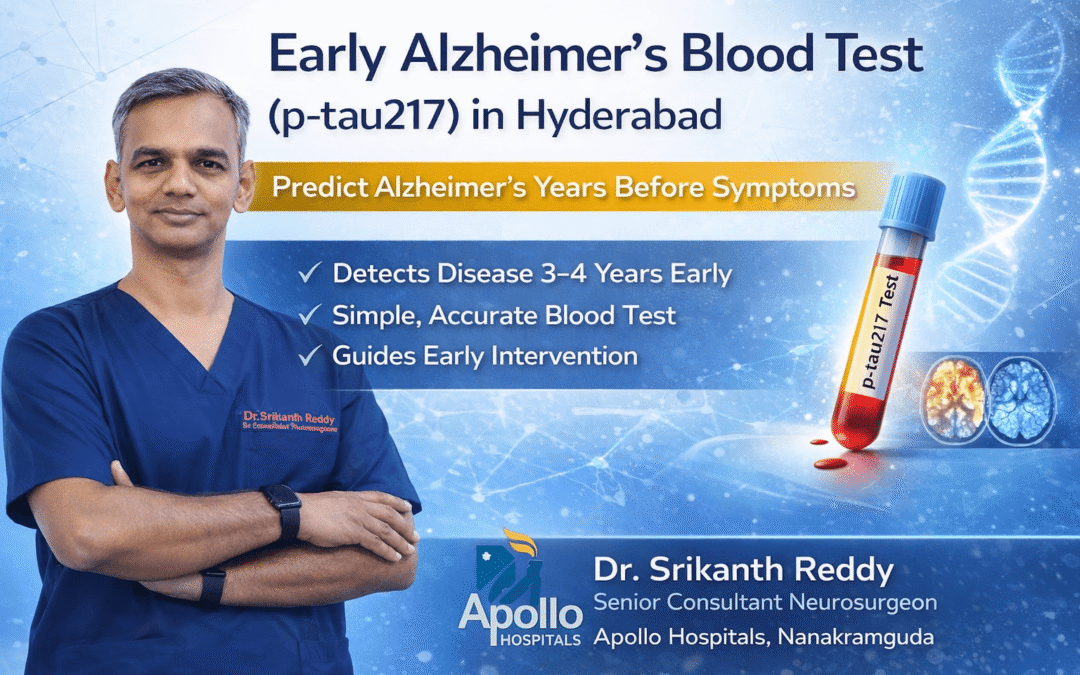
A major breakthrough in neurology has identified a powerful blood biomarker — phosphorylated tau protein 217 (p-tau217) — that can predict the onset of Alzheimer’s disease 3–4 years before clinical symptoms develop.
This discovery is reshaping how we approach early Alzheimer’s diagnosis, prevention, and treatment planning.
What Is the New Alzheimer’s Blood Test?
The new test measures p-tau217, a protein closely linked to Alzheimer’s pathology.
Recent large-scale, peer-reviewed international studies (2024–2026) show that rising blood levels of p-tau217 strongly correlate with:
✔ Amyloid plaque accumulation
✔ Tau tangle formation
✔ Transition from preclinical to symptomatic Alzheimer’s
✔ Faster cognitive decline
In multiple studies, blood p-tau217 predicted Alzheimer’s onset within a 3–4 year window with accuracy comparable to PET brain imaging.
In some research cohorts, accuracy reached 90–95% in distinguishing Alzheimer’s from other dementias.
Why Early Alzheimer’s Prediction Is a Game Changer
Intervention Before Brain Damage Progresses
By the time memory loss becomes visible, significant neuronal damage has already occurred.
Early detection allows doctors to aggressively address modifiable risk factors such as:
-
Poor sleep
-
Hypertension
-
Diabetes
-
Obesity
-
Inflammation
-
Sedentary lifestyle
Early action may slow progression and improve long-term brain health.
Better Planning for Patients and Families
A predictive blood test gives individuals:
✔ Time to plan financially and emotionally
✔ Opportunity to adopt preventive lifestyle changes
✔ Early monitoring and structured follow-up
Knowledge empowers preparation.
Improving Alzheimer’s Clinical Trials
One of the biggest barriers in Alzheimer’s research has been enrolling patients too late in the disease process.
Biomarker testing allows:
-
Earlier trial enrollment
-
Better tracking of disease progression
-
More accurate measurement of drug effectiveness
This could accelerate the development of disease-modifying therapies.
Reduced Dependence on Expensive Imaging
Currently, Alzheimer’s diagnosis may require:
-
PET scans
-
MRI imaging
-
Lumbar puncture (CSF testing)
A simple blood test offers:
✔ Lower cost
✔ Wider accessibility
✔ Easier repeat monitoring
✔ Less invasive testing
This expands access to early neurological evaluation.
What Is p-tau217 and Why Is It So Accurate?
Alzheimer’s disease is characterized by two abnormal proteins:
-
Amyloid-beta (forms plaques)
-
Tau protein (forms tangles inside neurons)
Tau proteins undergo abnormal phosphorylation in Alzheimer’s disease.
p-tau217 is one of the earliest detectable abnormal tau forms in the blood.
Importantly, p-tau217 levels rise:
✔ Before memory symptoms
✔ Before cognitive decline
✔ Before MRI changes
✔ Before PET scan positivity
This makes it one of the most promising early-warning biomarkers discovered in neurology.
Who Should Consider Early Alzheimer’s Testing?
While not yet a universal screening tool, early candidates may include:
-
Individuals with mild memory complaints
-
People with a family history of Alzheimer’s disease
-
APOE-ε4 genetic carriers
-
Patients with subjective cognitive decline
-
Individuals diagnosed with Mild Cognitive Impairment (MCI)
Consultation with a qualified neurologist or neurosurgeon is essential before undergoing biomarker testing.
Alzheimer’s Detection in Hyderabad: What Patients Should Know
Alzheimer’s research is advancing rapidly, and biomarker-based diagnosis is expected to become part of routine neurological assessment in memory clinics.
If you or your loved one is experiencing:
-
Progressive memory issues
-
Behavioral changes
-
Confusion
-
Difficulty with familiar tasks
Early neurological evaluation is critical.
Modern brain health care is shifting from late-stage diagnosis to early prediction and prevention.
The Future of Brain Health & Alzheimer’s Prevention
The discovery of p-tau217 represents a turning point in neurology.
We are moving toward a future where:
✔ Alzheimer’s can be predicted years in advance
✔ Early intervention may slow progression
✔ Personalized prevention strategies are possible
✔ Brain health monitoring becomes proactive
This transformation may redefine Alzheimer’s from a late-diagnosed condition to a more manageable neurological disorder.
Consult Dr. Srikanth Reddy – Neurosurgeon in Hyderabad
If you are concerned about memory changes or early cognitive decline, timely evaluation is important.
Dr. Srikanth Reddy provides comprehensive neurological consultation at:
📍 Apollo Hospitals, Nanakramguda, Hyderabad
Early diagnosis leads to better planning, better intervention, and better outcomes.